If you’ve started looking into building a pool in Cairns, chances are you’ve already had the concrete-vs-fibreglass conversation with someone. It’s a fair question to ask when you factor in the cost of both options and the implications the choice has on your pool area. The honest answer is that both have their place, but they’re built differently, and that difference matters more in North Queensland than it does almost anywhere else in the country.
We’ve been building pools here for nearly 50 years, which means we’ve had a long time to watch how each type of pool actually ages once the wet season, the humidity, and a Cairns summer have had a few years to work on it. That’s the perspective we’re always approaching our pool builds with, because that’s our reality up here.
We build concrete pools exclusively, and it’s not because we haven’t considered the alternative – it’s because for this climate and this ground, we genuinely think it’s the better long-term investment.
What’s Actually Different
A fibreglass pool is a single pre-moulded shell, manufactured off-site and craned into a pre-dug hole. It’s a fixed shape and finish, decided before it ever reaches your backyard.
A concrete pool is built in place – shaped to your block, reinforced with steel, and finished to your own design rather than a manufacturer’s mould. It takes longer to build, but everything from the shape to the surface finish is a decision you get to make, not one that’s already been made for you.
Why That Matters for Cairns Ground and Weather
Cairns has reactive clay soils in parts of the region, a genuine wet season, and real cyclone exposure. A concrete pool is engineered on-site around the specific soil conditions of your block, using a soil report before the build even starts – so it’s built to suit your ground, not a generic one.
A pre-formed fibreglass shell doesn’t have that same flexibility to be engineered around local ground conditions after the fact – it’s a fixed shape designed to a general standard, not to your specific block. Over years of wet seasons, that’s a meaningful difference, and it’s a core part of why we’ve built our business around concrete rather than offering both.
Where Concrete Really Opens Things Up
The part people don’t always think about upfront is design. Because a concrete pool is built rather than moulded, the finish is entirely up to you:
- Custom pebble finishes – a genuine range of colours and textures, rather than a standard gel-coat option
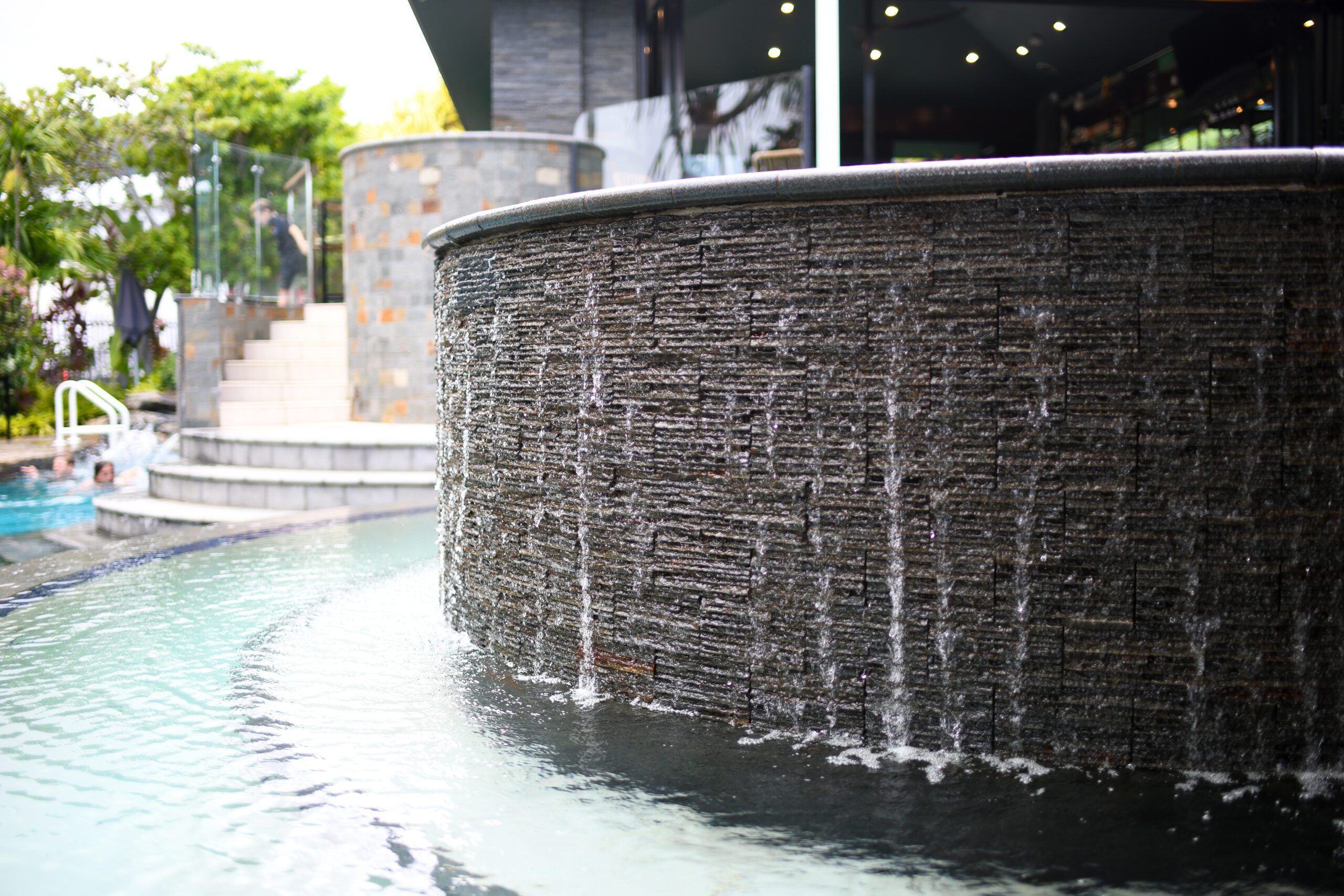
- Integrated water features – sheer descents, spillways, or a spa that blends into the main pool rather than sitting beside it
- Works around you – freeform, lap, plunge, or a shape built around an existing tree or deck
- Garden integration – the pool edge can work with landscaping and planting rather than around it, so the finished result reads as part of the backyard rather than a feature dropped into it
This is where a lot of clients land on concrete even before the engineering conversation – it’s simply a more flexible canvas for the pool you actually want, not the closest shape available off a shelf.
On Cost and Timeframe
Concrete costs more upfront and takes longer to build than a fibreglass install – that’s a fair trade-off to weigh up. What you’re paying for is a pool engineered for your specific block, finished to your own design, and – because the surface can be resurfaced down the track – one that doesn’t have a fixed lifespan on the shell itself the way a fibreglass gel coat eventually does.
For most of our clients, that’s the calculation that matters: not just what the pool costs to put in, but what it’s worth over the twenty-plus years it’ll actually be part of the backyard.
Have a Chat With Us
If you’re weighing this up, the best next step isn’t reading another article – it’s talking to someone who can look at your block, your soil, and what you actually want the finished pool to look and feel like. That’s a conversation we’re always happy to have, no pressure attached.